A Belt or a Tuck: Two Ways to Mark the Waist
A belt or a tuck can mark the waist in different ways. Compare silhouette, fabric bulk and colour contrast to choose the cleaner outfit finish.
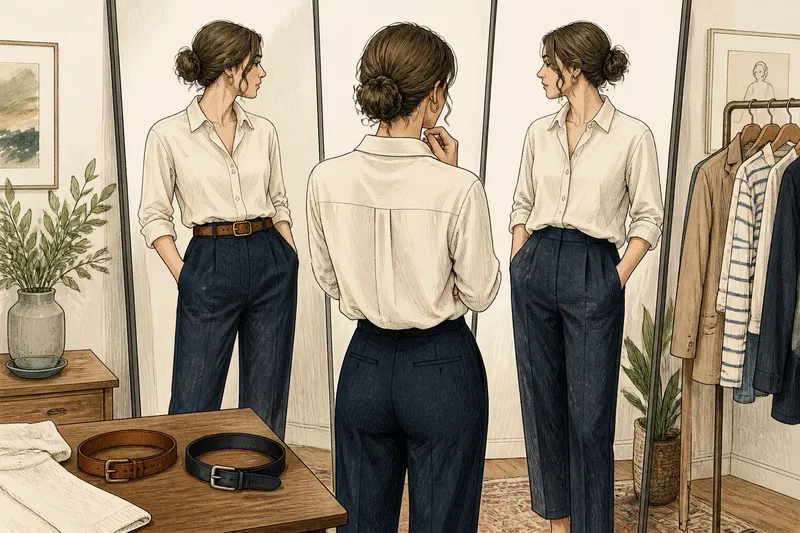
A belt or a tuck can change the same outfit from a continuous column into a look with a clear break at the waist. The difference is not simply whether you own a belt: a belt adds a separate line and some structure, while a tuck uses the top itself to shape the boundary between garments.
Choose by looking at three things together: where the waistline should sit, how much fabric gathers there, and whether you want a noticeable band of contrast. The aim is not to make every outfit look more defined; it is to decide whether a break helps the clothes hang and read as you intend.
What does each option do to the silhouette?
A belt draws a line across the outfit. It can make a loose dress or an untucked shirt-and-trouser combination look more deliberately divided, and its position can suggest where the waist sits. A narrow belt tends to make a lighter mark; a broad one gives that division more visual weight.
A tuck creates its break through the edge of the top and the waistband beneath it. A full tuck makes the waistline easy to see all the way round. A front tuck leaves more fabric at the sides and back, giving the outfit a less continuous, more relaxed shape.
Neither method changes the garment’s actual cut. A belt can gather fabric above or below its position, and a tuck can expose a high waistband, but the body of the top and the rise of the bottoms still determine where the clothing naturally falls. If a line feels awkward, shifting the belt or changing the tuck may help; forcing the fabric into a shape it does not hold usually will not.
How much fabric gathers at the waist?
Bulk is often the deciding factor. A slim, fluid blouse may sit neatly inside a waistband, while a thick sweatshirt can bunch into a ridge. A belt does not remove that excess fabric: it can press it into a smaller area, making the gathering more visible.
Try the tuck first when the top is thin enough to lie fairly flat and the waistband can contain its edge comfortably. A partial tuck can reduce the amount of fabric held at the front, but it may look uneven if the hem is bulky or the waistband is very stiff. For a smooth finish, let the fabric fall naturally rather than pulling it tightly across the body.
A belt can be the cleaner choice over an untucked top when the fabric would make a lumpy waistband. It can hold a loose shirt at a chosen point without packing its full hem inside trousers or a skirt. However, if the shirt is long and voluminous, a belt may create a gathered blouse effect; check the side view as well as the front.
Say you have a soft cotton shirt and straight-leg trousers. If a full tuck leaves a thick ridge, you could wear the shirt untucked with a belt at the trousers’ waistband; the expected visible result is a clear waistline without the shirt’s hem trapped inside. If the shirt still balloons above the belt, a front tuck or a different top may make the outline calmer.
How much contrast should the waistline introduce?
A belt introduces its own colour, texture and hardware. A dark leather belt over pale trousers creates a distinct stripe; a belt close in colour to the outfit makes a quieter interruption. A large buckle can draw the eye to the centre, while a plain fastening keeps the line simpler.
A tuck usually creates contrast through the difference between the top and bottoms, with the waistband or belt loops adding smaller details. If the two garments are close in colour, the tuck can still define the waist through the change in fabric or texture, but the division will be subtler than a contrasting belt.
Consider the whole outfit rather than matching a belt automatically to shoes or a bag. If there are already strong colour blocks, a high-contrast belt can add another competing line. If the outfit feels too uninterrupted, a belt can give it a focal point without changing the garments.
What is not worth the effort is hunting for a perfectly matched belt when a close, quiet colour will do. A belt that is uncomfortable or keeps shifting is also a poor choice simply because its colour works on paper.
Which waist-marking option suits your outfit?
Use the tuck when you want the waistband visible, the top is light enough to sit smoothly, or the outfit benefits from a clean division made by the garments themselves. It often suits tailored trousers, skirts with a defined waistband and tops whose hem is designed to be worn inside.
Use a belt when you want a separate accent, need to define the waist over an untucked layer, or prefer not to contain a bulky hem. It can work well over a dress or a loose shirt, provided the fabric settles cleanly above and below it.
For an easy decision, ask:
- Is the top thin enough to tuck without a noticeable ridge?
- Does the waistband look intentional when exposed?
- Would a separate belt add a useful colour or texture, or just another line?
- Does the fabric gather smoothly at the point where you want the waist to appear?
- Does the outfit look balanced from the side as well as from the front?
Try the answer in front of a full-length mirror, then sit and move naturally. If the tuck spills out or the belt rides up, the outfit may need a different placement or a less bulky top, not more adjustment.
What should you choose for common outfit questions?
Is a belt better than a tuck for a dress?
A belt can define a loose dress without changing its hem, while a tuck usually depends on the dress having a separate top and bottom. Check whether the fabric can gather at the belt without puffing out awkwardly.
Can you wear a belt with a tucked-in top?
Yes, if the belt adds a deliberate finish rather than crowding the waistband. A simple belt can frame a tucked shirt; a prominent buckle may be too much when the top already has a strong pattern or detail.
Should a belt match the trousers or the top?
There is no single required match. Choose a belt that relates to another colour or texture in the outfit, or keep it close to the trousers when you want the waistline to recede.
Does a front tuck suit every top?
No. It is easiest with a soft top whose hem can fall without a bulky knot of fabric. A stiff or unusually shaped hem may look more balanced left out or tucked in fully.
How can you make the final choice?
Start with the fabric: if it tucks flat, try that before adding an accessory. If it bunches, leave it out and consider a belt only if the gathered shape looks intentional. Then judge the strength of the line: choose a contrasting belt for a clear accent, a low-contrast belt for gentle definition, or a tuck when the clothes should create the division themselves.
A belt or a tuck is most useful when it supports the outfit’s existing shape rather than fighting it. Check the waistline while standing and moving, and keep the option that looks composed without needing constant readjustment.